Budget Spreadsheet Template
A budget works when it's quick to update and tells you something useful. Plan your month once, log spending in seconds, and the dashboard shows planned vs. actual for every category, with what's left.
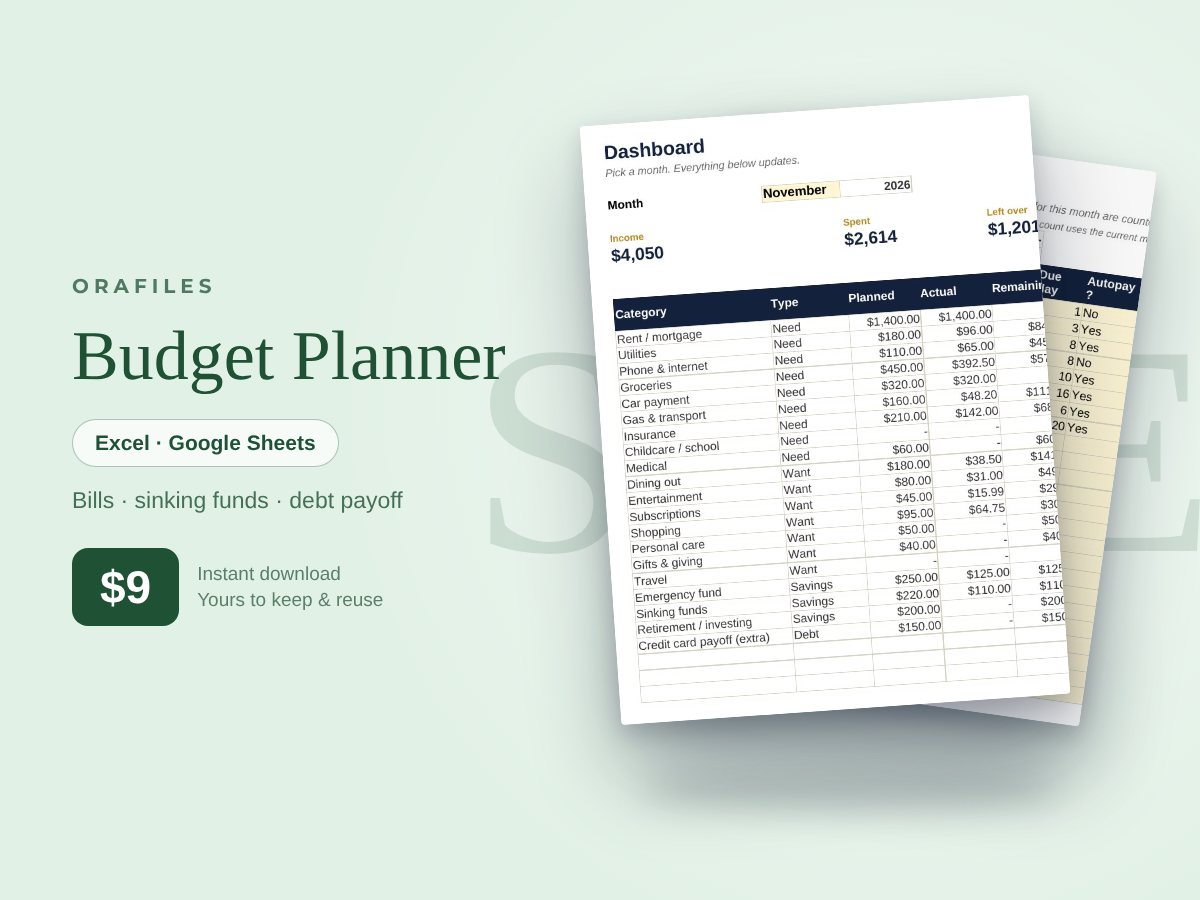
Budget Planner: Bills, Sinking Funds & Debt Payoff
Excel / Google Sheets (.xlsx) · $9 · one-time
Good to know before you buy
- •Opens in Excel, Google Sheets (free) or Apple Numbers. Easiest to set up on a computer.
- •Debt payoff dates are estimates using a fixed APR and payment. This is a planning tool, not financial advice.
- •Digital download. Nothing is shipped. You get the file right after checkout and by email.
- •Sales are final because files are delivered instantly, but if a file is broken or not as described, we'll fix it or refund you within 14 days. Details
What's inside
- •Monthly plan with needs, wants, savings and debt
- •50/30/20 check and 'left to assign' so every dollar has a job
- •Month-by-month dashboard and year overview
- •Bill tracker, sinking funds and debt payoff planner
How to start budgeting
- •Start with take-home pay, not your salary
- •List fixed bills first, then groceries and gas
- •Give every leftover dollar a job: savings or extra debt payments
- •Check in weekly for a few minutes
What you get
- ✓Monthly budget plan with a 50/30/20 check and 'left to assign'
- ✓Dashboard: pick a month, see planned vs. actual and a year overview
- ✓Transaction log with category dropdowns
- ✓Bill tracker: 12-month paid checklist, next due date, unpaid count
- ✓Sinking funds: goals, target dates and how much to save per month
- ✓Debt payoff: months to pay off, interest cost, snowball and avalanche order
- ✓Works in Excel, Google Sheets and Numbers, no macros, no bank login
Frequently asked questions
What is the 50/30/20 rule?
A common guideline: about 50% of take-home pay for needs, 30% for wants and 20% for savings and extra debt payments. The planner shows your split so you can compare.